Clinical Video Guides
Dr. Abhishek Ray shares essential exercises, medical insights, and guidelines to help you maintain ear, nose, throat, and brain health.

Stop Doomscrolling: 1-Minute Brain Exercise
Instead of doomscrolling, take a quick hand exercise break to stimulate neural paths and prevent cognitive decline. These simple neuro-motor movements boost coordination and brain connectivity.
How Hand Exercises Prevent Dementia
Bimanual and complex finger-coordination exercises activate motor regions of the frontal cortex and stimulate neuroplasticity. Clinical research suggests that brief cognitive-motor breaks reduce stress, interrupt automatic doomscrolling, and build synaptic resilience.
Step-by-Step Coordination Drill
- 1Finger Opposition (Thumb Taps)Touch each finger of your hand to your thumb sequentially (Index, Middle, Ring, Pinky), then go backward. Repeat with both hands simultaneously.
- 2Finger Tapping SequencePlace both hands flat on a table. Lift each finger one by one, starting from the pinky to the thumb. Alternate between hands to stimulate motor pathways.
- 3Alternating Fist and PalmMake a fist with one hand while keeping the other flat. Alternating rapidly between making a fist and keeping the hand flat.
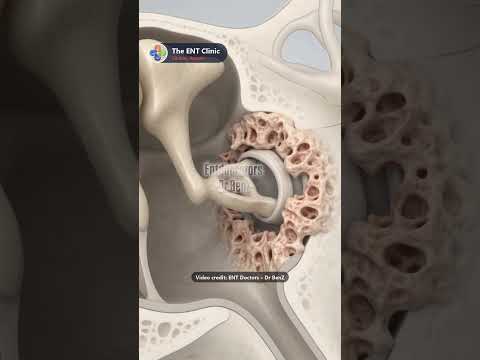
Otosclerosis Explained: Why the Ear Bone Gets Stuck
A quick animated look at how abnormal bone growth locks the stapes in the middle ear, causing gradual hearing loss — and why an early ENT check-up matters.
What Is Otosclerosis?
In a healthy ear, the tiny stapes bone vibrates freely to carry sound to the inner ear. In otosclerosis, abnormal bone growth fixes the stapes in place, so sound can't pass through properly. The result is gradual hearing loss, often with ringing in the ears.
Common Signs
- 1Hearing slowly getting worse in one or both ears
- 2Ringing or buzzing in the ears (tinnitus)
- 3Hearing better in noisy places
Otosclerosis can be treated with hearing aids or surgery. An early check-up matters.
Explore the Otology ClinicVideo credit: ENT Doctors – Dr BenZ. For educational purposes only; not a substitute for medical advice.

Inside the Cochlea: The Nerves That Let You Hear
A close-up of the snail-shaped hearing organ in your inner ear and the nerve fibres that carry sound to the brain.
How the Cochlea Lets You Hear
The cochlea is a tiny, snail-shaped organ inside your inner ear. Thousands of hair cells inside it turn sound vibrations into electrical signals, and the fibres of the cochlear (hearing) nerve carry those signals to the brain — that's how you hear.
When Hearing Aids Aren't Enough
- 1Badly damaged hair cells can cause severe hearing loss
- 2A cochlear implant bypasses the damaged hair cells
- 3It stimulates the hearing nerve directly, helping many children and adults hear again
If a child or an elderly family member can't hear properly, consult an ENT specialist without delay.
Explore the Otology ClinicVideo credit: ENT Doctors – Dr BenZ. For educational purposes only; not a substitute for medical advice.
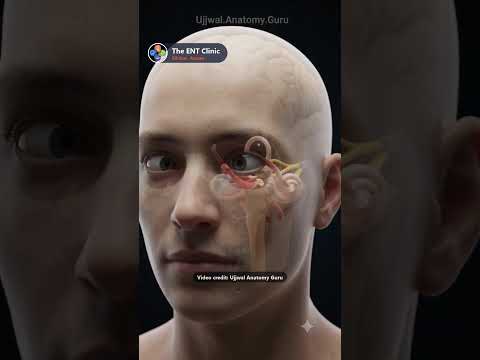
How Your Ear Keeps Your Eyes Steady: The Vestibulo-Ocular Reflex
Why your vision doesn't shake when you walk or turn your head — a look at the inner-ear reflex that keeps your eyes steady.
Your Inner Ear and Steady Vision
Your inner ear has three semicircular canals that sense every head movement. They send signals through the vestibular nerve to the brainstem, which instantly tells your eye muscles to move the opposite way. This is the Vestibulo-Ocular Reflex (VOR), and it keeps your vision steady.
When the Balance System Is Disturbed
- 1Dizziness or a spinning sensation (vertigo)
- 2Blurred or jumping vision when moving
- 3Feeling unsteady while walking
Inner ear problems such as BPPV, vestibular neuritis or Ménière's disease can disturb this system. If you have dizziness or balance problems, consult an ENT specialist.
Explore the Vertigo & Balance ClinicVideo credit: Ujjwal Anatomy Guru. For educational purposes only; not a substitute for medical advice.
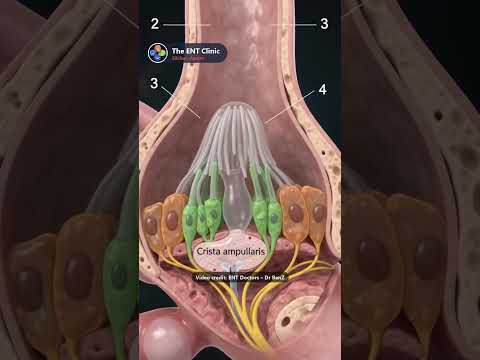
How Your Inner Ear Senses Head Rotation: The Crista Ampullaris
How your body knows when your head turns — a look at the tiny motion sensor inside each semicircular canal.
The Inner Ear's Rotation Sensor
Inside each semicircular canal of your inner ear is a tiny sensor called the crista ampullaris. When you turn your head, the fluid inside the canal (endolymph) lags behind and pushes a jelly-like cap called the cupula. The bending activates sensitive hair cells, and the vestibular nerve sends the signal to your brain — this is how you sense rotation and stay balanced.
What Can Disturb It
- 1Loose ear crystals (BPPV)
- 2Inner ear infection
- 3Inflammation of the balance system
Any of these can cause sudden spinning dizziness (vertigo). If you have sudden dizziness or lose your balance, consult an ENT specialist.
Explore the Vertigo & Balance ClinicVideo credit: ENT Doctors – Dr BenZ. For educational purposes only; not a substitute for medical advice.
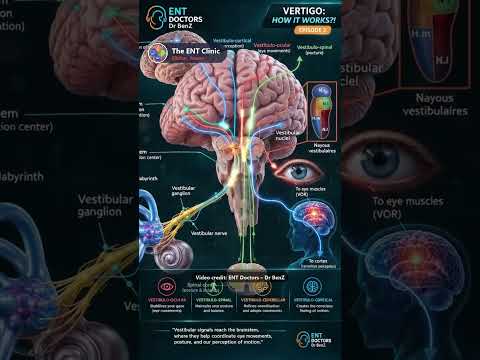
Vertigo: How Your Balance System Works, from Inner Ear to Brain
Why you feel dizzy or like the room is spinning — an overview of the whole balance system, from the inner ear sensors to the brain.
How Your Balance System Works
Your inner ear has two types of balance sensors: the semicircular canals, which sense head rotation, and the otolith organs, which sense straight-line movement and gravity. They send signals through the vestibular nerve to the brainstem, which passes them along four pathways.
The Four Balance Pathways
- 1Vestibulo-ocular — keeps your vision steady
- 2Vestibulo-spinal — controls posture and balance
- 3Vestibulo-cerebellar — fine-tunes coordination
- 4Vestibulo-cortical — gives you the feeling of motion
When any part of this system is disturbed, the brain gets mixed signals, and the result is vertigo, dizziness or unsteadiness. If you have dizziness, blurred vision or trouble keeping your balance while walking, consult an ENT specialist.
Explore the Vertigo & Balance ClinicVideo credit: ENT Doctors – Dr BenZ. For educational purposes only; not a substitute for medical advice.
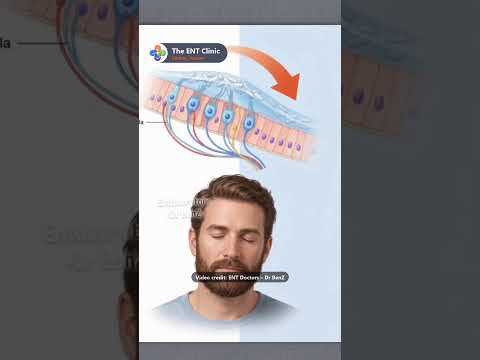
How Your Ear Senses Gravity & Head Tilt: Otoliths Explained
How your brain knows your head is tilted, even with your eyes closed — a look at the tiny crystals in your inner ear that sense gravity.
The Ear Stones That Sense Gravity
Inside your inner ear are two small sensors called the utricle and saccule. Each has a patch called the macula, covered with a jelly-like layer holding tiny calcium crystals called otoliths (“ear stones”). This system senses head position and straight-line movement, known as static equilibrium.
When You Tilt Your Head
- 1Gravity pulls the otoliths
- 2The jelly layer shifts
- 3Hair cells underneath bend
- 4The vestibular nerve tells your brain your head's position
If these crystals come loose and drift into the wrong part of the ear, they can cause BPPV, one of the most common causes of sudden spinning dizziness when you turn in bed or look up. BPPV is treatable; consult an ENT specialist.
Explore the Vertigo & Balance ClinicVideo credit: ENT Doctors – Dr BenZ. For educational purposes only; not a substitute for medical advice.
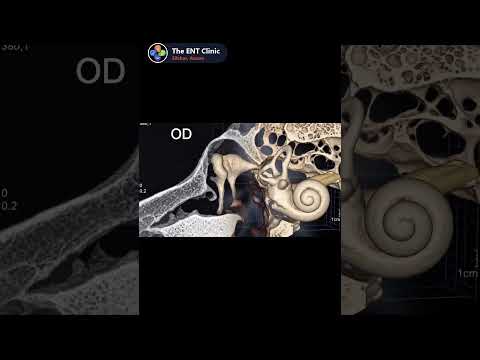
CT Scan of the Ear in 3D: See the Ear Bones & Cochlea
What the inside of your ear looks like on a CT scan — a normal image of the right ear turned into a 3D model.
Seeing Inside the Ear with a CT Scan
ENT doctors use CT scans of the ear (temporal bone) to look for problems such as chronic ear infections, cholesteatoma and damage to the ear bones, and to plan surgeries like cochlear implants.
What the 3D Model Shows
- 1The ear bones (ossicles) — the smallest bones in your body, which carry sound
- 2The cochlea — the snail-shaped hearing organ
- 3The semicircular canals — your balance sensors
Long-standing ear problems, pus discharge from the ear or reduced hearing? Consult an ENT specialist for the right tests and treatment.
Explore the Otology ClinicFor educational purposes only; not a substitute for medical advice.
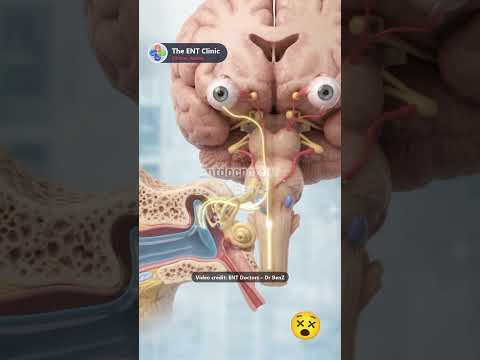
Why Water in Your Ear Can Make You Dizzy: The Caloric Effect
Ever felt dizzy after cold water got into your ear while swimming or bathing? Here's why it happens.
How Water Tricks Your Balance Sensors
When cold (or warm) water enters the ear canal, it changes the temperature of the fluid inside your inner ear's balance canals. The fluid starts to move, tricking your balance sensors into thinking your head is spinning. ENT doctors use this same effect in the “caloric test” to check how well each inner ear's balance system is working.
What Happens Next
- 1The inner ear sends signals through the vestibular nerve to the brainstem
- 2The brainstem makes your eyes move involuntarily (nystagmus)
- 3You feel dizzy, even though you're not moving
If you have a hole in your eardrum, water can reach the middle ear more easily and cause dizziness or infection, so take care while bathing and swimming. If water in the ear brings dizziness, ear pain or pus discharge, consult an ENT specialist without delay.
Explore the Vertigo & Balance ClinicVideo credit: ENT Doctors – Dr BenZ. For educational purposes only; not a substitute for medical advice.